



Authenticity at Scale: The New Promise and Practice of Creator Marketing

Synopsis
Every marketer wants the same thing:
Scale with credibility.
Scale is easy. Write a check, turn on paid media, and reach millions of people overnight. The problem is credibility. Brands telling people they’re great has never been particularly convincing—and in an era defined by record cynicism, it’s often ignored entirely.
So marketers look elsewhere.
Press. Reviews. Creators. Third-party voices people actually trust.
That’s where credibility lives.
But credibility, historically, doesn’t scale.
A review lands once. A creator breaks through. Something works—and then it disappears. Lightning strikes, but never on demand.
This is where most conversations stop. Scale versus authenticity. Reach versus trust. One or the other.
That framing is wrong.
Why authenticity usually collapses at scale
Authenticity doesn’t fail because it’s fragile.
It fails because traditional ad systems aren’t built to protect it.
As soon as scale is introduced, incentives change. Language gets standardized. Risk gets removed. Messages are optimized until the human edges that made them believable in the first place are smoothed away.
Creators become mouthpieces.
Stories become formats.
Authenticity turns into performance.
At that point, scale hasn’t amplified credibility—it’s stripped it out.
This is why so much “authentic” marketing feels artificial. It’s not that the people involved aren’t real. It’s that the scaling systems remove authorship, accountability, and consequence.
Authenticity is not a personality trait
The mistake is treating authenticity as something a person simply has.
Authenticity is a system property.
It survives when the voice remains accountable, the story originates in lived experience, the creator retains authorship, and the system resists over-optimization.
It collapses when messages are over-scripted, scale is prioritized over consequence, control replaces governance, and performance metrics erase context.
This is the real tension in modern marketing—not whether authenticity matters, but whether it can survive the machinery built to distribute it.
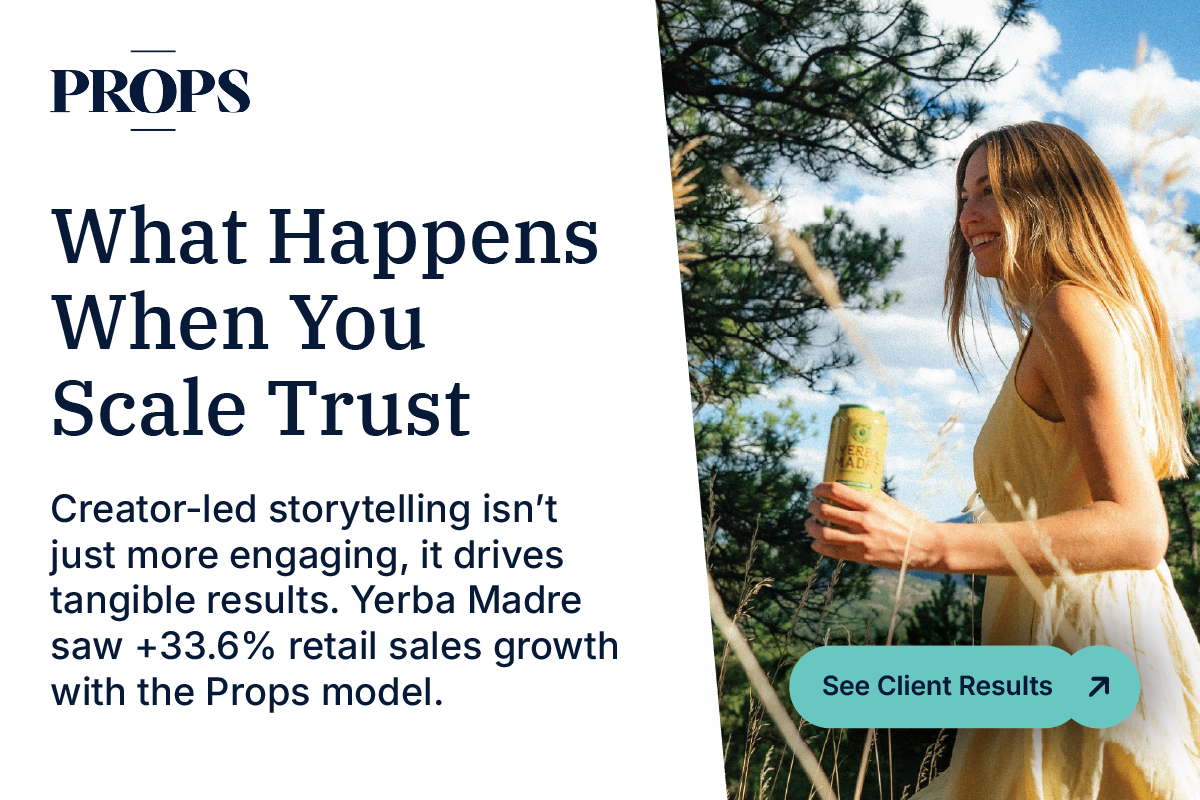
The promise of creator marketing
Creator marketing represents a rare opportunity.
Creators already carry credibility. They speak with personal consequence. Their words cost them something. That’s why people listen.
To make creator marketing as scalable as ads is not creators with more followers, it’s systems that scale creator impact without removing what makes them credible.
That requires discipline.
Authenticity cannot be manufactured. But it can be protected.
This is the shift now underway. Away from creators as content. Toward creators as the center of systems designed to preserve trust while enabling reach.
What authenticity at scale actually means
Authenticity at scale does not mean more content.
It does not mean louder voices.
It does not mean chasing virality.
It means designing systems where credibility enters upstream, distribution amplifies without distorting, accountability remains intact, and performance does not erase belief.
When those conditions are met, scale stops being the enemy of trust.
It becomes its multiplier.
The future of creator marketing won’t be decided by who finds the most charismatic voices. It will be decided by who builds systems disciplined enough to let those voices remain real.
Authenticity doesn’t disappear when scale arrives.
It disappears when systems aren’t built to defend it.
That’s the work now.
Jon Bond is the co-founder of Kirshenbaum Bond + Partners (KB+P), one of the most influential advertising agencies of its era. He is known for helping shift advertising away from interruption and toward intelligence, credibility, and respect for the audience. His thinking on trust, scale, and belief continues to shape modern brand and media strategy.



How CPG Brands Drive Retail Sales With Creators
%20copy.jpeg)


36 West 25th Street, 11th Floor
New York, New York 10010
propsplatform@props.us