



Which Creator Tier Wins at Each Funnel Stage?

Synopsis
Which Creator Tier Wins at Each Funnel Stage?
Brands keep asking me whether they should work with celebrities or creators.
After 15 years in the creator economy, managing creators, advising brands, and informing creator strategy at firms like McKinsey, my answer is always the same: you're asking the wrong question.
The real question is: where do you need impact across the funnel, and which creator tier can deliver it?
Celebrities can deliver reach and aspiration. That model worked when attention was centralized and consumers trusted institutions. Neither of those things is true anymore. Media is fragmented, audiences are skeptical of polished campaigns, and the trust that drives purchase decisions now lives with creators — built over years of consistent, direct engagement with their audiences.
Too many brands still treat creators like celebrities. They chase mega-creators for reach and stop there. Or they go straight to micro-creators expecting conversions without investing in awareness first.
Different creator tiers serve different funnel stages.
And it's not just the creator. It's the content.
The best practice isn't just mapping talent to funnel stages. It's shaping content to each stage too.
Most brands brief creators the same way regardless of where in the funnel they're operating. A polished, high-production video might build brand awareness but kills conversion — it looks too much like an ad. A raw, unfiltered demo drives purchase decisions but does little for discovery. The content format has to match the job.
Polished content for awareness. Raw demos for conversion. Educational deep-dives for consideration. These aren't just stylistic choices. They're strategic ones. The brands getting this right brief creators differently at each stage, with different success metrics, different creative direction, and different distribution strategies.
Creators and creator content work best as a system. Each person and each piece of content designed to do a specific job.
Two brands that built the system
Industry analyses report Nike achieved 6.2x ROI versus 1.5x from traditional media after shifting from celebrity-first to a fully tiered creator strategy across TikTok, Instagram, and YouTube. They also saw 340% more user-generated content.
Here's how they structured it:
Awareness: Globally recognized athletes deliver aspiration and scale at the top of the funnel
Consideration: Mid-tier voices in specific communities build trust and shape perception
Conversion: Micro-creators — fitness coaches, personal trainers, wellness creators — provide the credibility and specificity that drives purchase
Critically, Nike didn't brief them all the same way. Runners for running gear. Female athletes for women's shoes. Local fitness communities for wellness campaigns. The creator and the content were matched to the audience and the stage.
Wonderskin took a different approach — fewer creators, more intentional mapping. They partnered with 12 creators across tiers and briefed each one based on funnel stage.
At the top: polished, high-production content designed for awareness and brand discovery. In the middle: tutorials and explainers to build consideration. At the bottom: raw, unfiltered demos — the "peel and reveal" videos that drove conversions on TikTok.
Then they remixed it all. 300+ assets repurposed from one system. Same creators, same footage, different cuts for different stages and placements. Full-funnel impact without starting from scratch every time.
Different tiers, different jobs, same strategy.
Props is built around exactly this approach — a full-funnel, performance-driven creator marketing platform for brands ready to move beyond one-off campaigns.
The framework
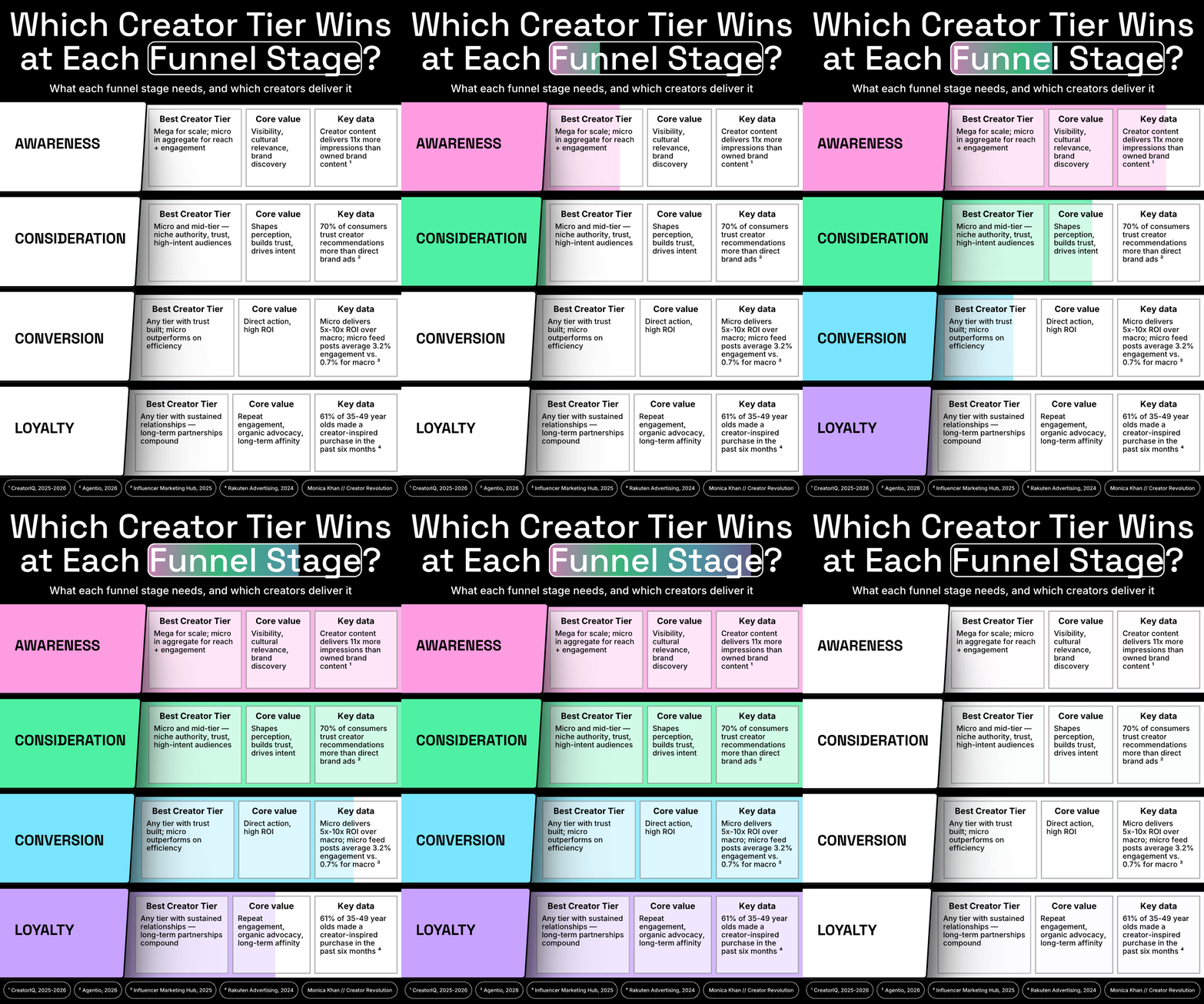
Here's how the funnel breaks down and which creators deliver at each stage:
Awareness: Mega for scale; micro in aggregate for reach and engagement. Creator content delivers 11x more impressions than owned brand content. The goal here isn't conversion — it's earned attention at scale from voices audiences already trust.
Consideration: Micro and mid-tier for niche authority, trust, and high-intent audiences. 70% of consumers trust creator recommendations more than direct brand ads. These creators shape how people think about a category, not just a product.
Conversion: Any tier with trust built; micro outperforms on efficiency. Micro delivers 5x-10x ROI over macro; micro-influencer feed posts average 3.2% engagement vs. 0.7% for macro. The audience relationship is what converts — not the follower count.
Loyalty: Any tier with sustained relationships. 61% of 35-49 year olds made a creator-inspired purchase in the past six months. Long-term creator partnerships compound. A creator who mentions your brand six months after a campaign ends, because someone asked, is worth more than any single sponsored post.
The shift
Most brands approach creator marketing as a media buy. They set a budget, select a creator, approve content, and measure impressions. That's not a system. That's a transaction.
The brands building durable creator programs think differently. They map tiers to funnel stages. They brief content to match the job. They build relationships that extend beyond campaign windows. And they measure outcomes, not just outputs.
Outcomes means different things at each stage. At awareness, it's share of earned impressions and brand search lift. At consideration, it's content save rates and comment quality. At conversion, it's click-through and attributed revenue. At loyalty, it's repeat purchase rate and organic brand mentions. Most brands only measure the middle. The ones winning measure all four.
The question worth asking isn't celebrities or creators. It's which tier, at which stage, for what outcome.
This post was created in partnership with Props.
Sources:
CreatorIQ, 2025-2026 Influencer Marketing Trends Report: https://www.creatoriq.com/resources/reports
Agentio, 2026 Creator Trust Study: https://www.agentio.com/research
Influencer Marketing Hub, 2025 Benchmark Report: https://influencermarketinghub.com/influencer-marketing-benchmark-report/
Rakuten Advertising, 2024 Consumer Survey: https://rakutenadvertising.com/resources/
Nike creator strategy via Stack Influence: https://stackinfluence.com/nike-target-audience-drive-influencer-roi-2026/
Wonderskin creator strategy via Insense: https://insense.pro/case-study/wonderskin-case-study
Wonderskin video performance via Videowise: https://videowise.com/customer-stories/wonderskin-shoppable-video
How CPG Brands Drive Retail Sales With Creators
%20copy.jpeg)



36 West 25th Street, 11th Floor
New York, New York 10010
hi@props.us